Welcome to the microscopic theater of the symbiotic culture of bacteria and yeast. We are not merely brewing a beverage; we are conducting a high-stakes biochemical audit of a living ecosystem. When you peer into a fermentation vessel, you are witnessing a metabolic war where Saccharomyces cerevisiae and Acetobacter aceti dance a frantic tango of conversion. The goal is a razor-sharp Kombucha Acid Profile that balances the aggressive bite of acetic acid with the mellow, structural depth of gluconic and glucuronic acids. If your current brew tastes like a flat sugar-water disaster or a bottle of industrial-strength cleaning vinegar, your equilibrium is shattered. We demand a liquid that is piquant, effervescent, and structurally sound. This is about precision. We are managing pH drops with the scrutiny of a forensic accountant. We want that specific, tongue-curling brightness that signifies a successful ethanol-to-acid conversion. Forget the hippie-dippie guesswork of the past; we are here to optimize the molecular output of our SCOBY and claim total sensory dominance over the glass.
THE DATA MATRIX
| Metric | Specification |
|---|---|
| Prep Time | 30 Minutes |
| Execution Time | 7 to 21 Days (Fermentation Dependent) |
| Yield | 3.8 Liters / 1 Gallon |
| Complexity (1-10) | 6 |
| Estimated Cost per Serving | $0.25 USD |
THE GATHERS
Ingredient Protocol:
- 3.8 Liters / 1 Gallon: Filtered Water (De-chlorinated).
- 240ml / 1 Cup: Organic Cane Sugar (Sucrose).
- 20g / 8-10 Bags: High-Tannin Black Tea (Camellia Sinensis).
- 475ml / 2 Cups: Raw Finished Kombucha (Starter Liquid).
- 1 Unit / 150g: Active SCOBY (Pellicle).
Section A: Ingredient Quality Audit:
The primary failure point in any Kombucha Acid Profile is the water source. Municipal tap water containing chlorine or chloramines will effectively lobotomize your microbial colony. If your water smells like a public pool, your SCOBY will stall, leading to a viscous, syrupy mess that refuses to ferment. Use a carbon filtration system or boil the water for 20 minutes to dissipate volatile compounds. Secondly, avoid flavored teas or those with essential oils like Earl Grey. The bergamot oil will eventually turn the fats in the pellicle rancid, disrupting the emulsification of nutrients. If your tea is weak, increase the dry weight rather than the steep time to avoid over-extracting bitter, woody tannins that clash with the acidity.
THE MASTERCLASS
1. The Thermal Infusion
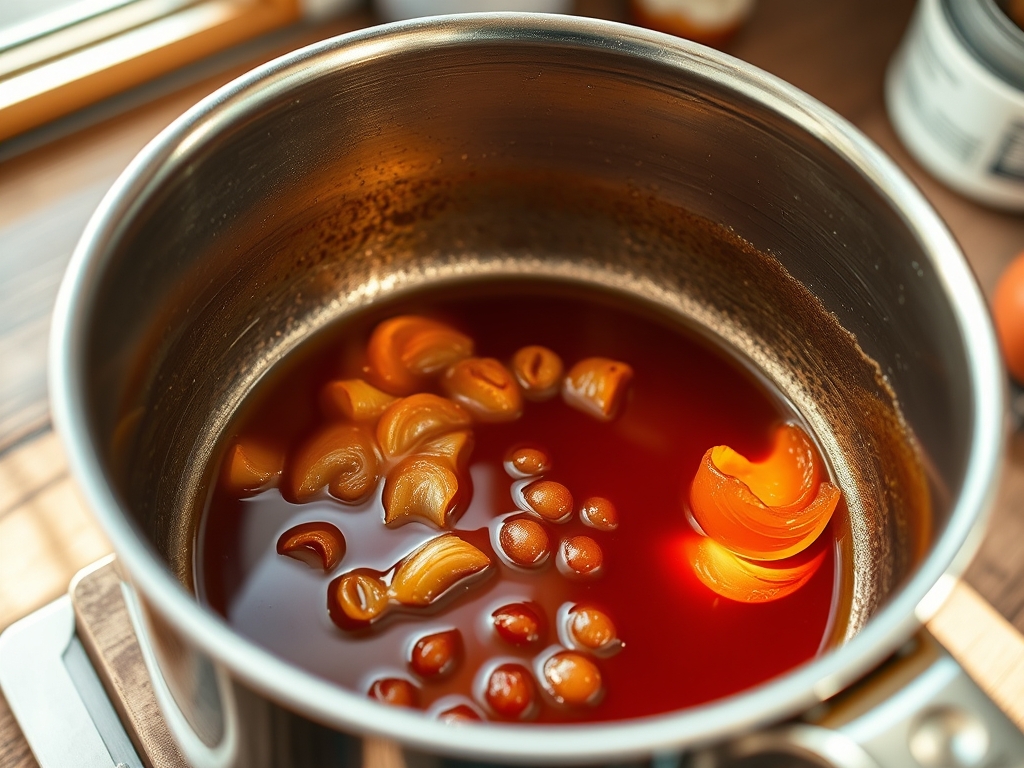
Begin by bringing 1 liter of your filtered water to a precise 95 degrees Celsius. Use a digital scale to weigh your tea leaves to the gram; precision here ensures consistent nitrogen levels for the yeast. Infuse the tea for exactly seven minutes before removing the leaves.
Pro Tip: Use a stainless steel saucier for even heat distribution. The science here is about tannin extraction; if the water is too cool, you fail to provide the polyphenols necessary for the SCOBY to build a robust cellulose structure.
2. The Sucrose Dissolution
While the tea is piping hot, add your cane sugar. Stir vigorously with a long-handled stainless steel spoon until the solution is completely clear. You are creating the primary fuel source for the yeast to convert into ethanol, which the bacteria will then transform into acid.
Pro Tip: Ensure every crystal is dissolved to prevent "hot spots" of sugar at the bottom of the vessel. A bench scraper can be used to clear your workstation of any stray granules to maintain a sterile environment.
3. The Cold-Crash Dilution
Add the remaining 2.8 liters of cold, filtered water to the hot tea concentrate. This rapid cooling is essential to prevent the thermal shock of your microbial colony. The final temperature must be between 20 and 28 degrees Celsius before the SCOBY is introduced.
Pro Tip: Use an infrared thermometer to verify the temperature. If you introduce the SCOBY at temperatures above 35 degrees Celsius, you risk killing the bacteria and ruining the Kombucha Acid Profile before the audit even begins.
4. The Inoculation Protocol
Carefully pour in your starter liquid followed by the SCOBY pellicle. The starter liquid is the most critical component; it lowers the initial pH to below 4.5, which acts as a chemical shield against invasive mold and pathogens. Cover the vessel with a breathable cotton cloth and a heavy-duty rubber band.
Pro Tip: The starter liquid should be taken from the top of a previous batch where the acetic acid bacteria are most concentrated. This ensures a rapid start to the acidification process.
Section B: Prep & Timing Fault-Lines:
The most common human error is the "set it and forget it" fallacy. Fermentation is a dynamic curve, not a flat line. If your kitchen temperature fluctuates more than 5 degrees, your yeast and bacteria will fall out of sync. High heat favors yeast, leading to an overly alcoholic or "yeasty" funk; low heat favors the bacteria but slows them to a crawl, risking mold. Use a fermentation heat mat with a thermostat to lock in a consistent 24 degrees Celsius. If the brew tastes like apple juice after day seven, it needs more time to render those sugars into acids.
THE VISUAL SPECTRUM
Section C: Thermal & Visual Troubleshooting:
Referencing the Masterclass photo, observe the clarity and the healthy, cream-colored pellicle. If you see "fuzzy" patches that are green, black, or bright white, you have a mold breach; discard the entire batch and sterilize with peracetic acid. If your liquid is excessively cloudy or brown, you have "yeast bloom," likely caused by over-steeping the tea or using unfiltered honey. A healthy Kombucha Acid Profile should result in a liquid that is translucent with a slight amber glow. If the pellicle sinks, do not panic; a new one will form on the surface as the bacteria aerate the top layer and produce cellulose.
THE DEEP DIVE
Macro Nutrition Profile:
A standard 250ml serving contains approximately 30 calories, 7g of carbohydrates (mostly residual sucrose and fructose), and negligible protein or fat. The value lies in the organic acids: acetic, gluconic, and lactic.
Dietary Swaps:
For a Keto-compliant brew, extend the fermentation time to 21+ days until the residual sugar is near zero. For a caffeine-free version, swap black tea for Rooibos, though note that the lack of nitrogen may require a "booster" of yeast nutrient to maintain the SCOBY's health.
Meal Prep & Reheating Science:
Kombucha is a raw, living product. Never heat it above 40 degrees Celsius or you will denature the enzymes and kill the probiotic bacteria. To maintain molecular structure during storage, keep it in "swing-top" pressure-rated bottles in a dark, cold refrigerator to halt the fermentation process.
THE KITCHEN TABLE
Why does my kombucha taste like sulfur?
This usually indicates stressed yeast. It occurs if the temperature is too high or if the water contains high levels of minerals. Ensure you are using filtered water and keeping the vessel in a cool, stable environment to fix the scent.
Can I use honey instead of sugar?
Using honey creates "Jun." While possible, honey has its own antimicrobial properties that can weaken a standard SCOBY over time. If you swap, do it gradually over several batches to allow the bacteria to adapt to the new glucose-fructose ratio.
How do I get more carbonation?
Carbonation happens in a "Second Fermentation." Bottle the finished liquid with a teaspoon of fruit juice and seal it tightly for 3 days at room temperature. The trapped CO2 will dissolve into the liquid, creating a fine, aggressive fizz.
My SCOBY has brown stringy bits hanging off it?
Those are yeast strands and are a sign of a healthy, vigorous fermentation. They are responsible for the ethanol production that feeds your acid-producing bacteria. Do not filter them out until you are ready to bottle and serve.