Forget everything you know about the tepid, watery infusions served at high tea; we are entering the realm of high-performance molecular extraction. When you handle Aspalathus linearis, you are not just making a beverage; you are managing a complex bio-chemical matrix. The star of this show is the unique phenolic compound known as aspalathin. This rare C-glucosyl dihydrochalcone is the heavy hitter among Rooibos Antioxidants, providing a potent defense against oxidative stress while delivering a flavor profile that is naturally sweet, earthy, and deep. To capture this essence, you cannot simply "steep" the leaves. You must engineer an environment that maximizes solute solubility without triggering the degradation of delicate volatile oils. We are looking for a liquor that is deep mahogany, remarkably clear, and possesses a viscous mouthfeel that coats the palate like a fine reduction. This is an audit of your liquid infrastructure. If your extraction is thin or bitter, your protocol is flawed. We are here to optimize the concentration and ensure every milligram of those Rooibos Antioxidants makes it into your glass.
THE DATA MATRIX
| Metric | Specification |
|---|---|
| Prep Time | 5 Minutes |
| Execution Time | 12 Minutes |
| Yield | 500ml / 2 Servings |
| Complexity (1-10) | 4 |
| Estimated Cost per Serving | $0.85 |
THE GATHERS
Ingredient Protocol:
- 20g / 4 tablespoons High-Grade Long-Cut Red Rooibos
- 500ml / 2 cups Filtered Alkaline Water (pH 7.5 to 8.0)
- 15ml / 1 tablespoon Raw Wildflower Honey (Optional)
- 2g / 0.5 teaspoon Malic Acid or Fresh Lemon Zest
- 1 Cinnamon Stick (Ceylon variety for low coumarin)
Section A: Ingredient Quality Audit:
The primary failure point in herbal infrastructure is the age of the raw material. If your Rooibos smells like dusty hay rather than sweet tobacco and vanilla, the essential oils have oxidized. This results in a flat, one-dimensional profile. To fix this, store your tea in an airtight, opaque container away from light. Another common culprit is tap water high in calcium carbonate. Hard water prevents the solubility of Rooibos Antioxidants, resulting in a cloudy, metallic infusion. Use a charcoal filter or a specialized alkaline pitcher to ensure the water acts as a neutral solvent. If the leaves appear too "dusty," use a fine-mesh sieve to remove the fannings before brewing; this prevents over-extraction and ensures a cleaner, more refined liquor.
THE MASTERCLASS
1. Thermal Calibration and Vessel Selection
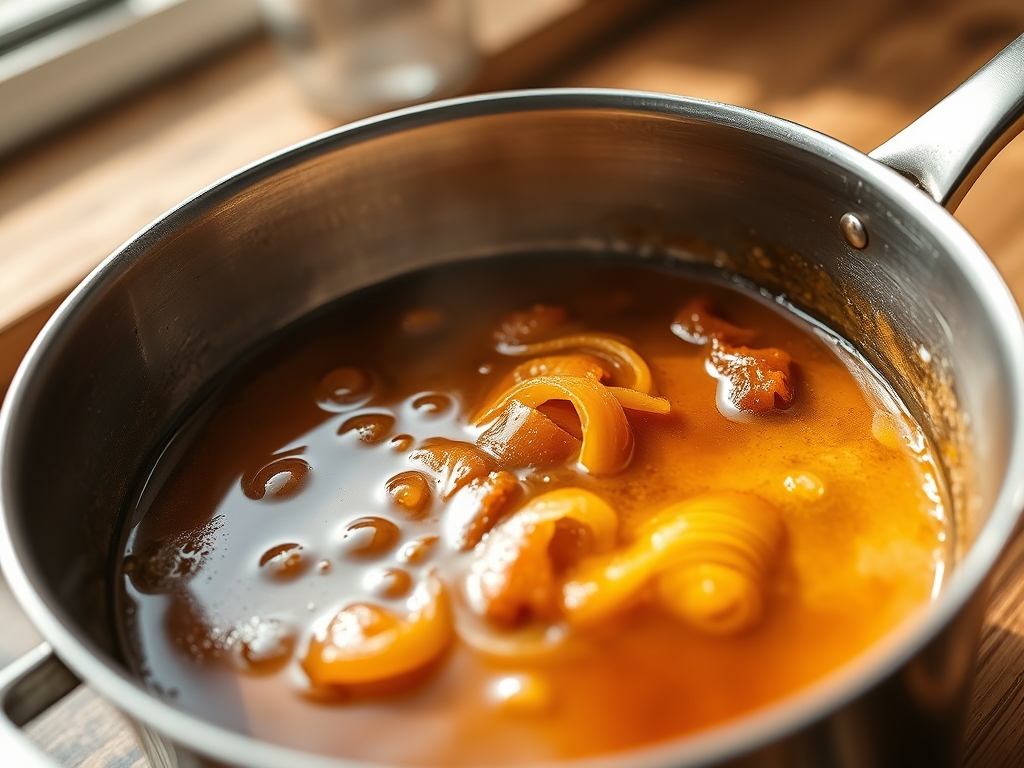
Place your stainless steel saucier or a temperature-controlled electric kettle on the heat source. Bring your filtered water to exactly 96 degrees Celsius (205 degrees Fahrenheit). Do not reach a rolling boil. A rolling boil drives off dissolved oxygen, which is necessary to aerate the liquid and lift the aromatic compounds.
Pro Tip: Use a high-precision digital scale to weigh your tea leaves rather than relying on volumetric spoons. Density varies wildly between brands; weight is the only way to ensure a consistent solute-to-solvent ratio.
2. The Primary Infusion Phase
Add the Rooibos leaves to the water. Instead of a standard teapot, use a French press or a glass beaker to allow the leaves to circulate freely. This creates a "vortex" effect where the hot water can penetrate the cellular walls of the needle-like leaves more efficiently. Cover the vessel immediately to prevent the escape of volatile aromatic esters.
Pro Tip: This is a "long-pull" extraction. Unlike Camellia sinensis, Rooibos is virtually tannin-free. You can infuse for up to 10 minutes without developing bitterness, which is crucial for maximizing the concentration of Rooibos Antioxidants.
3. Agitation and Emulsification
At the five-minute mark, use a long-handled spoon or a bench scraper if you are working on a flat surface to gently stir the mixture. This mechanical agitation breaks the surface tension and ensures that any trapped air pockets in the leaves are displaced by the hot water. If adding honey, whisk it in now to allow the heat to render the sugars into a stable syrup.
Pro Tip: Mechanical agitation increases the kinetic energy of the molecules, accelerating the rate at which the viscous polyphenols move from the leaf into the liquid.
4. Filtration and Final Polish
Depress the plunger of your French press slowly or pour the liquid through a double-layered fine-mesh strainer. If you notice any sediment, pass the liquid through a paper filter. This "polishes" the tea, removing micro-particles that can create a gritty texture on the tongue.
Pro Tip: A clean filtration process ensures that the final product has a brilliant, jewel-like clarity, which is a key indicator of a professional-grade herbal extraction.
Section B: Prep & Timing Fault-Lines:
The most frequent human error is "thermal shock." If you pour boiling water directly onto the leaves, you risk scorching the delicate sugars in the plant material. Conversely, if your water temperature drops below 90 degrees Celsius during the 10-minute steep, the extraction efficiency plummets, leaving those precious Rooibos Antioxidants trapped in the fiber. Use a pre-warmed vessel to maintain thermal stability. If your timing is off and the tea sits for 20 minutes, do not panic. Because Rooibos lacks caffeine and tannins, it will not become astringent; it will simply become more concentrated.
THE VISUAL SPECTRUM
Section C: Thermal & Visual Troubleshooting:
Look closely at the Masterclass photo above. Notice the deep, ruby-red hue and the lack of turbidity. If your tea looks "muddy" or tan, your water pH is likely too acidic, or you have used low-quality "dust" grade tea. If the color is pale, you have not allowed enough time for the pigment migration. A successful brew should show a bright, reflective surface. If you see an oily film on top, this is actually a good sign; it indicates a high concentration of natural essential oils. However, if the film is multicolored, it is a reaction between the tea's acids and minerals in your water. Use a more rigorous filtration system for your water next time to maintain visual purity.
THE DEEP DIVE
Macro Nutrition Profile:
Per 250ml serving, this infusion contains 0 calories, 0g fat, 0g protein, and 0g carbohydrates. Its value lies entirely in its micronutrient density, specifically its high levels of Vitamin C, Manganese, and the potent Rooibos Antioxidants like aspalathin and nothofagin.
Dietary Swaps:
- Vegan: Ensure your sweetener is agave or maple syrup instead of honey.
- Keto: Omit all sweeteners; the natural vanillin in Rooibos provides a perceived sweetness without the glycemic load.
- GF: Naturally gluten-free, but ensure your spices are certified to avoid cross-contamination.
Meal Prep & Reheating Science:
Rooibos is incredibly stable. You can brew a large batch and store it in the refrigerator for up to five days. When reheating, do not use a microwave, as it can cause localized "hot spots" that degrade the molecular structure of the antioxidants. Instead, use a small saucier over low heat to gently bring the liquid back to service temperature. This preserves the viscous mouthfeel and prevents the flavor from turning "stale."
THE KITCHEN TABLE
Why is my tea cloudy after it cools?
This is known as "creaming." It happens when polyphenols and minerals bond at lower temperatures. It does not affect the quality of the Rooibos Antioxidants. A quick reheat or a squeeze of lemon juice will instantly clear the liquid.
Can I over-steep Rooibos?
Technically, no. Unlike green or black tea, Rooibos lacks the tannins that cause bitterness. You can leave the leaves in the water for thirty minutes and the result will simply be a more potent, viscous concentrate.
Does Rooibos have more antioxidants than green tea?
While both are high in polyphenols, Rooibos contains aspalathin, which is not found in any other plant. This makes it a unique tool for managing metabolic health and oxidative stress without the jitters associated with caffeine.
What is the best way to store bulk Rooibos?
Oxygen is the enemy. Use a vacuum-sealed bag or a ceramic jar with a silicone seal. Keep it in a cool, dark pantry. Avoid the refrigerator, as condensation can introduce moisture and lead to mold growth.