Stop treating your morning beverage like a lukewarm tea and start treating it like a high-performance chemical suspension. We are not just stirring powder into milk; we are conducting a structural overhaul of cellular bioavailability. Curcumin is a stubborn, hydrophobic beast that refuses to cooperate with your digestive tract unless it is escorted by a sophisticated delivery system of Golden Milk Lipids. Without a precise fat-to-spice ratio, that vibrant yellow powder simply passes through your system as expensive, unabsorbed waste. We are here to fix that. Imagine a texture so viscous it coats the palate like liquid velvet, carrying notes of earthy ginger and sharp black pepper that cut through the richness of a perfectly rendered fat source. This is the intersection of ancient herbalism and modern molecular gastronomy. We are building a suspension that defies gravity and optimizes human performance. Grab your apron and your digital scale; we are about to audit your morning routine with the surgical precision of a Michelin-starred laboratory.
THE DATA MATRIX
| Metric | Specification |
|---|---|
| Prep Time | 5 Minutes |
| Execution Time | 12 Minutes |
| Yield | 500ml / 2 Servings |
| Complexity (1-10) | 4 |
| Estimated Cost per Serving | $1.25 |
THE GATHERS
Ingredient Protocol:
- 500ml / 2 cups Whole Grass-Fed Milk or Full-Fat Coconut Milk
- 5g / 1.5 tsp Ground Turmeric (High Curcumin Content)
- 3g / 1 tsp Virgin Coconut Oil or Ghee
- 2g / 0.5 tsp Ground Ginger
- 1g / 0.25 tsp Freshly Cracked Black Pepper (Piperine Source)
- 10ml / 2 tsp Raw Manuka Honey or Maple Syrup
- 1 Small Cinnamon Stick (Ceylon variety preferred)
Section A: Ingredient Quality Audit:
If your turmeric looks dull and brownish, it has oxidized and lost its piquant edge. High-quality turmeric should be a neon orange that threatens to stain your countertops forever. If using plant-based milks, avoid "light" versions. Without a high concentration of Golden Milk Lipids, the curcumin will precipitate out of the liquid and settle at the bottom of your mug. If your black pepper is pre-ground and dusty, throw it away. You need the volatile oils found in freshly cracked peppercorns to trigger the piperine reaction, which increases curcumin absorption by up to 2,000 percent. If the mixture tastes bitter rather than earthy, you likely have low-grade ginger. Technical fix: Add a pinch of sea salt to suppress bitterness and enhance the natural sweetness of the lipids.
THE MASTERCLASS
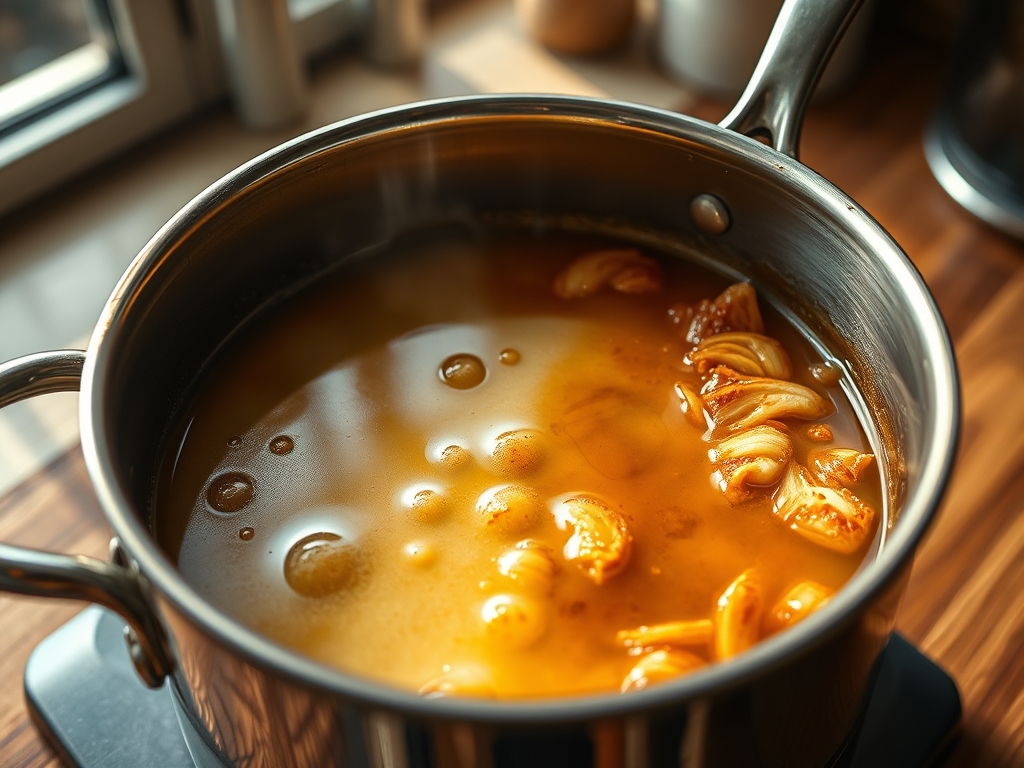
1. The Lipid Activation Phase
Place your saucier over low heat and add the coconut oil or ghee. Once the fat has melted and reached a shimmering state, whisk in the turmeric and black pepper. This process, known as "blooming," allows the fat-soluble compounds in the spices to dissolve directly into the Golden Milk Lipids.
Pro Tip: Using a heavy-bottomed saucier ensures even heat distribution, preventing the delicate oils in the spices from scorching. This initial emulsification is the most critical step for nutrient delivery.
2. The Aqueous Integration
Slowly pour your milk of choice into the spice-lipid paste. Increase the heat to medium-low. Use a silicone whisk to vigorously aerate the liquid as it warms, ensuring that no clumps of turmeric remain isolated.
Pro Tip: A digital scale is your best friend here. Measuring liquid by weight (1ml of milk is approximately 1g) ensures consistent viscosity across every batch you produce.
3. Thermal Infusion
Add the cinnamon stick and ginger. Bring the mixture to a gentle simmer, but do not allow it to reach a rolling boil. You are looking for small bubbles around the perimeter of the pan. Maintain this temperature for 8 to 10 minutes to infuse the woody aromatics into the fat globules.
Pro Tip: If the milk reaches 180 degrees Fahrenheit, the proteins may begin to denature and skin over. Use an infrared thermometer to monitor the surface temperature for professional precision.
4. The Final Emulsification
Remove the cinnamon stick. Use a high-speed frother or an immersion blender to whip the mixture for 30 seconds. This step breaks down the fat droplets into a finer suspension, creating a micro-foam that locks in the heat and flavor.
Pro Tip: If any residue sticks to the bottom of the pan, use a bench scraper or stiff spatula to deglaze the surface with a splash of hot milk, reclaiming those concentrated flavor compounds.
Section B: Prep & Timing Fault-Lines:
The most common failure is the "Flash Boil." If you rush the heat to save three minutes, you will break the emulsion, resulting in a thin liquid with an oily slick on top. Another fault-line is the "Late Pepper Addition." Piperine must be present during the heating phase to properly bond with the Golden Milk Lipids. If you add it at the table, you are missing the molecular window for maximum bioavailability.
THE VISUAL SPECTRUM
Section C: Thermal & Visual Troubleshooting:
Referencing the Masterclass photo, your final product should exhibit a deep, sunset-gold hue with a frothy, stable head of foam. If your drink appears pale yellow or "milky," your spice-to-lipid ratio is too low; increase the turmeric by 1 gram. If you see dark speckles sinking rapidly, your emulsion has failed. This usually happens if the milk was added too quickly to the oil. To fix this, use an immersion blender to force the fats back into suspension. A dull, matte surface indicates the fats have not been properly rendered or bloomed. The surface should have a slight sheen, reflecting the light and signaling a successful lipid-curcumin bond.
THE DEEP DIVE
Macro Nutrition Profile:
A standard serving contains approximately 180 calories, 12g of fat (primarily medium-chain triglycerides if using coconut), 9g of carbohydrates, and 8g of protein. The focus here is not caloric restriction but nutrient density and anti-inflammatory signaling.
Dietary Swaps:
- Vegan: Substitute whole milk with cashew milk for the highest natural fat content. Avoid rice milk as it lacks the structural integrity to support the spices.
- Keto: Swap the honey for a drop of liquid monk fruit and increase the grass-fed butter or MCT oil to 10g.
- GF: Naturally gluten-free, but ensure your spices are certified to avoid cross-contamination fillers.
Meal Prep & Reheating Science:
You can batch-cook this base and store it in a glass mason jar for up to four days. However, the molecular structure will settle. When reheating, do not use a microwave; the uneven radiation will shatter the lipid bonds. Reheat in a small pot over low heat, whisking constantly to re-emulsify the Golden Milk Lipids as they reach serving temperature.
THE KITCHEN TABLE
Why does my turmeric settle at the bottom?
Your emulsion is weak. You likely skipped the blooming phase in fat. Without the Golden Milk Lipids acting as a carrier, the heavy spice particles will succumb to gravity. Use a frother to reintegrate the suspension before drinking.
Can I use fresh turmeric root instead?
Absolutely. Grate 15g of fresh root for every 5g of powder. Note that fresh root has higher water content, so you may need to simmer the mixture longer to achieve the desired viscous consistency and flavor concentration.
Is the black pepper strictly necessary?
Yes. Without piperine, your liver metabolizes curcumin so quickly that you gain almost zero systemic benefit. The pepper acts as a metabolic gatekeeper, allowing the nutrients to enter your bloodstream instead of being filtered out immediately.
Why use a saucier instead of a standard pot?
The rounded bottom of a saucier eliminates "dead zones" where spices can hide and burn. It allows your whisk to reach every millimeter of the surface, ensuring a perfectly smooth and homogenized beverage every time.