Forget the lukewarm lattes and the dusty health-store capsules that taste like sawdust and broken promises. We are diving into the high-octane world of endocrine optimization through the lens of a culinary infrastructure audit. Maca Root Adaptogens are not merely supplements; they are the raw architectural materials for your hormonal skyscraper. Imagine a flavor profile that sits at the intersection of toasted malt, scorched caramel, and a deep, earthy musk that demands respect from your palate. When you introduce this Peruvian powerhouse into a high-fat, emulsified matrix, you aren't just making a beverage; you are conducting a thermal extraction of bioactive alkaloids. This is about biological leverage. We are looking for that specific golden-hued viscosity that signals a perfect suspension of solids within a lipid base. The goal is a velvety, piquant elixir that resets your cortisol baseline while providing a slow-burn energy release that makes caffeine look like a jittery amateur. Prepare your workstation; we are about to re-engineer your morning ritual with surgical precision and culinary flair.
THE DATA MATRIX
| Metric | Specification |
|---|---|
| Prep Time | 5 Minutes |
| Execution Time | 8 Minutes |
| Yield | 2 Servings (350ml each) |
| Complexity (1-10) | 4 |
| Estimated Cost per Serving | $1.85 |
THE GATHERS
Ingredient Protocol:
- 30g / 4 tbsp Gelatinized Maca Powder (The core of our Maca Root Adaptogens)
- 500ml / 2 cups Unsweetened Cashew Milk (High-fat content for better suspension)
- 15ml / 1 tbsp Raw Manuka Honey (For enzymatic activity and piquant sweetness)
- 5g / 1 tsp Ceylon Cinnamon (To regulate glycemic response)
- 2g / 0.5 tsp Pink Himalayan Salt (To sharpen the mineral profile)
- 10ml / 2 tsp MCT Oil or Grass-fed Ghee (To facilitate fat-soluble nutrient transport)
- 1 drop Vanilla Bean Paste (For aromatic depth)
Section A: Ingredient Quality Audit:
The most common failure point in this protocol is the use of "raw" maca rather than "gelatinized" powder. Raw maca contains dense starch chains that are notoriously difficult for the human digestive tract to dismantle; this often results in bloating and poor nutrient bioavailability. If your powder smells unpleasantly bitter or looks grey rather than golden-tan, it has likely oxidized. To fix a bitter batch, increase the lipid content (MCT oil) to coat the tongue and dampen the perception of alkaloids. If your nut milk is separating, it lacks the necessary lecithin; a quick whisk with a pinch of sunflower lecithin will re-establish the emulsion.
THE MASTERCLASS
1. The Thermal Foundation
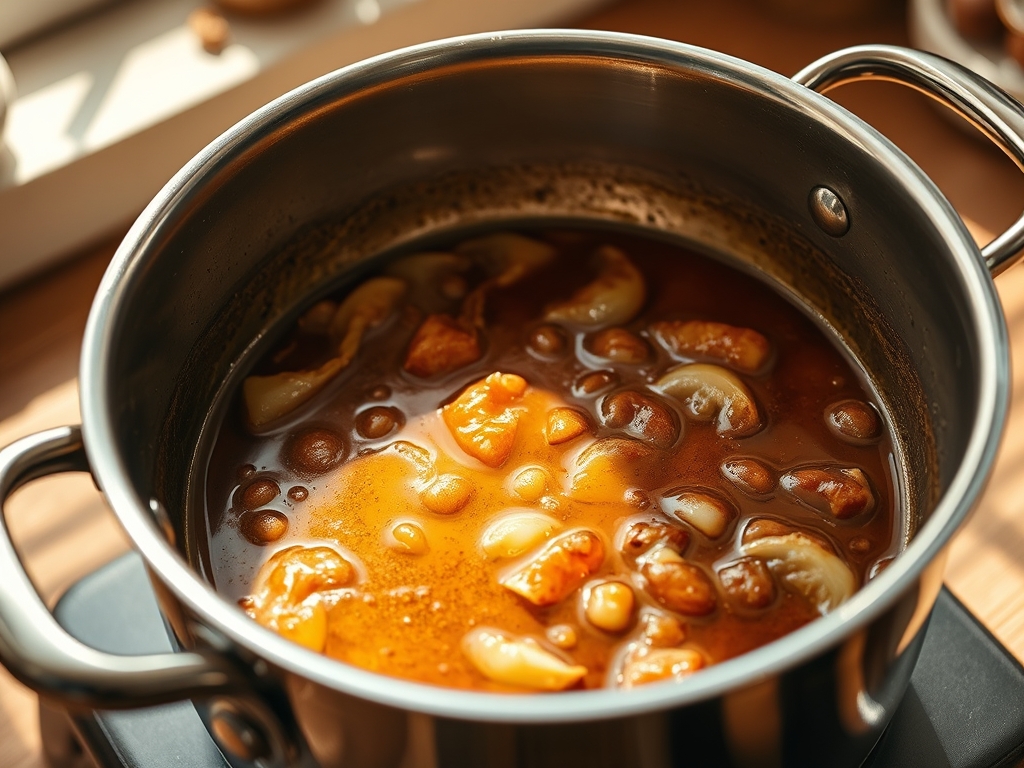
Begin by pouring your cashew milk into a stainless steel saucier over medium-low heat. Use a digital probe thermometer to monitor the temperature. We are targeting a precise 75 degrees Celsius (167 degrees Fahrenheit). Do not allow the liquid to reach a rolling boil, as this will denature the delicate proteins in the nut milk and create an unpleasant "cooked" skin on the surface.
Pro Tip: Using a saucier with rounded bottom edges allows your whisk to reach every millimeter of the surface area, preventing localized scorching and ensuring a consistent thermal gradient across the entire liquid volume.
2. The Dry Phase Integration
In a small ceramic bowl, weigh out your Maca Root Adaptogens, cinnamon, and salt using a high-precision digital scale. Sift these dry ingredients together to break up any clumps. Once the milk reaches the target temperature, slowly rain the dry mixture into the liquid while whisking vigorously in a figure-eight motion.
Pro Tip: The figure-eight motion creates a chaotic flow pattern that prevents the "eye of the storm" effect found in circular whisking; this ensures that the maca particles do not congregate in the center and form dry pockets of un-hydrated powder.
3. The Lipid Emulsification
Add the MCT oil or ghee and the vanilla bean paste to the saucier. Transfer the mixture to a high-speed blender or use a heavy-duty immersion blender directly in the pot. Process on high for 45 seconds to aerate the mixture and create a micro-foam. This step is crucial for "locking" the adaptogens into the fat molecules, which protects them from degradation in the stomach.
Pro Tip: High-speed blending induces mechanical shear, which breaks down the fat globules into microscopic droplets. This increases the surface area of the lipids, allowing for a more stable emulsion and a luxurious, creamy mouthfeel without the need for dairy.
4. The Enzymatic Finish
Remove the mixture from the heat and allow it to cool to 60 degrees Celsius (140 degrees Fahrenheit) before stirring in the Manuka honey. This preservation of temperature is vital to keep the honey's live enzymes intact. Use a silicone spatula to scrape the sides of the vessel, ensuring no concentrated sediment remains at the bottom.
Pro Tip: A silicone spatula acts as a "bench scraper" for your pot; it ensures that the most nutrient-dense part of the elixir—the settled maca solids—is fully incorporated into the final pour.
Section B: Prep & Timing Fault-Lines:
The primary timing error is adding the honey too early. High heat destroys the bioactive compounds in premium honey, turning a superfood into mere sugar. Furthermore, if you rush the blending phase, the drink will feel "gritty" on the tongue. If the mixture cools too much before you blend, the fats will not emulsify properly, leading to an oily slick on top of a watery base. Always pre-warm your serving mugs with hot water to maintain the molecular vibration of the drink as you consume it.
THE VISUAL SPECTRUM
Section C: Thermal & Visual Troubleshooting:
Look closely at the reference image above. Notice the "golden hour" hue and the fine, uniform micro-foam on the surface. If your drink looks dull or brownish, you have likely scorched the maca or used a low-grade cinnamon. If the foam is composed of large, soapy bubbles rather than a tight, velvet-like "crema," your blending time was insufficient or your lipid-to-liquid ratio was too low. A successful audit results in a liquid that is viscous enough to coat the back of a spoon (nappe consistency) but fluid enough to be sipped effortlessly. If you see dark specks at the bottom of the cup, your dry-phase integration failed; next time, sift more thoroughly.
THE DEEP DIVE
Macro Nutrition Profile:
A single serving provides approximately 180 calories, 12g of healthy fats, 15g of complex carbohydrates (primarily from the maca starch and honey), and 4g of plant-based protein. The real value lies in the micronutrients: high levels of manganese, copper, and Vitamin B6.
Dietary Swaps:
- Vegan: Use MCT oil and maple syrup or monk fruit instead of ghee and honey.
- Keto: Replace honey with stevia or erythritol and increase ghee to 20ml.
- GF: Naturally gluten-free, but ensure your maca is certified to avoid cross-contamination.
Meal Prep & Reheating Science:
You can batch-prepare the base (milk and maca) and store it in the refrigerator for up to 48 hours. However, the emulsion will break during cooling. To reheat, do not use a microwave; the uneven radiation will create "hot spots" that damage the adaptogens. Reheat gently on the stovetop and re-blend for 20 seconds to restore the molecular structure and aerate the lipids.
THE KITCHEN TABLE
What is the best time to consume this?
Ideally, consume this in the morning or early afternoon. The adaptogenic properties of maca help modulate the cortisol awakening response, providing sustained focus without the "crash" associated with high-caffeine stimulants.
Can I use black maca instead of yellow?
Yes. Black maca is often cited for higher potency regarding cognitive function and stamina. It has a slightly more "roasted" flavor profile, so you may want to increase the vanilla paste to balance the earthiness.
Why is my drink separating after five minutes?
This indicates a weak emulsion. Ensure you are using a high-speed blender rather than just a hand whisk. The mechanical force is necessary to keep the fats and water-based liquids unified.
Does maca lose its power if boiled?
While gelatinized maca has already been heat-treated, prolonged boiling can degrade certain heat-sensitive phytonutrients. Stick to the 75 degree Celsius limit for the best balance of solubility and nutrient density.