Forget everything you know about the dusty, cardboard-flavored flakes of the past. We are entering the realm of high-octane savory fortification where the humble flake becomes a structural powerhouse. When you deploy Nutritional Yeast B12 into a recipe, you are not just adding a seasoning; you are executing a chemical takeover of the palate. This deactivated yeast, Saccharomyces cerevisiae, offers a profile that is aggressively savory, hitting those umami receptors with the force of a high-speed collision. It provides a deep, nutty, and piquant resonance that mimics the most expensive aged parmesans without the dairy overhead. Beyond the flavor, we are looking at a metabolic goldmine. For the modern culinary architect, Nutritional Yeast B12 is the primary vector for delivering essential cobalamin in a plant-based matrix. It is the difference between a dish that merely tastes good and one that functions as a high-performance fuel cell. We are going to harness this golden dust to create a viscous, gold-standard "Liquid Gold" Umami Reduction that will redefine your kitchen infrastructure.
THE DATA MATRIX
| Metric | Specification |
|---|---|
| Prep Time | 10 Minutes |
| Execution Time | 15 Minutes |
| Yield | 500ml / 2 Cups |
| Complexity (1-10) | 3 |
| Estimated Cost per Serving | $0.45 USD |
THE GATHERS
Ingredient Protocol:
- 60g / 1 cup Nutritional Yeast B12 (Large flake variety preferred).
- 480ml / 2 cups Filtered Water or Vegetable Stock.
- 45g / 3 tbsp All-Purpose Flour (or Chickpea Flour for GF).
- 42g / 3 tbsp High-Smoke Point Oil or Vegan Butter.
- 10ml / 2 tsp Liquid Aminos or Soy Sauce.
- 5g / 1 tsp Smoked Paprika.
- 2g / 0.5 tsp Turmeric (for chromatic enhancement).
- 1.5g / 0.25 tsp Garlic Powder (Micro-milled).
Section A: Ingredient Quality Audit:
If your Nutritional Yeast B12 smells like old gym socks rather than toasted walnuts, your batch has likely oxidized. Always store your flakes in an opaque, airtight container to prevent light-induced degradation of the B vitamins. If your flour is clumping during the initial phase, it usually indicates high ambient humidity in your storage area. The fix is simple: Sift your dry goods through a fine-mesh sieve before they ever touch the pan to ensure a smooth molecular integration. If using a vegetable stock, ensure it is low-sodium. The yeast itself has a natural saltiness; over-salting the base liquid will result in a caustic finish that overpowers the delicate nuttiness of the B12 fortification.
THE MASTERCLASS
Step 1: The Lipid Foundation
Place your saucier on a digital scale to weigh out 42g of your fat source. Heat over medium-low until the fat begins to shimmer but not smoke. If using butter, wait for the milk solids to foam and then subside. This is the critical moment to render any moisture out of the fat to prepare for a stable emulsion.
Pro Tip: Using a saucier with rounded bottom edges allows your whisk to reach every millimeter of the surface, preventing the "dead zone" scorching common in straight-sided pans. This ensures a uniform thermal distribution.
Step 2: The Roux Construction
Slowly whisk in your flour to create a blonde roux. You are looking for a consistency that resembles wet sand. Cook this mixture for exactly three minutes. We are not looking for a dark mahogany color here; we want to cook out the raw starch flavor while maintaining a neutral base that will not compete with the Nutritional Yeast B12.
Pro Tip: Use a bench scraper to keep your workstation clean as you measure. The science here is amylase neutralization; cooking the flour ensures the sauce stays viscous even after it cools, rather than turning into a gelatinous mass.
Step 3: The Umami Infusion
Gradually stream in your liquid (water or stock) while whisking vigorously. Once the liquid is incorporated and the mixture begins to thicken, kill the heat. Now, fold in your Nutritional Yeast B12, paprika, turmeric, and garlic powder. The residual heat is sufficient to infuse the flavors without scorching the delicate B vitamins.
Pro Tip: Adding the yeast at the end preserves the integrity of the Nutritional Yeast B12. Excessive boiling can degrade certain heat-sensitive vitamins. Use a silicone whisk to avoid scratching your pan while maximizing aeration.
Step 4: The Final Emulsion
Add the liquid aminos and whisk until the sauce is glossy and perfectly smooth. If the sauce appears too thick, add a tablespoon of liquid at a time until it coats the back of a spoon. This is known as the nappe stage in professional kitchens.
Pro Tip: If the sauce breaks or looks oily, a quick 30-second pulse with an immersion blender will re-establish the emulsion by shearing the fat globules into the aqueous phase.
Section B: Prep & Timing Fault-Lines:
The most common failure in this infrastructure is the "Thermal Spike." If you add your liquid too fast to a hot roux, the starch granules explode and create lumps that no amount of whisking can fix. The solution is the "Cold Liquid, Hot Roux" rule. Always ensure your stock is at room temperature or cooler when hitting the hot pan. Another timing error is the "Late Whisk." You must be active from the second the liquid touches the fat. If you find yourself with a lumpy sauce, pass the entire mixture through a Chinois or fine-mesh strainer into a clean pot to recover the texture.
THE VISUAL SPECTRUM
Section C: Thermal & Visual Troubleshooting:
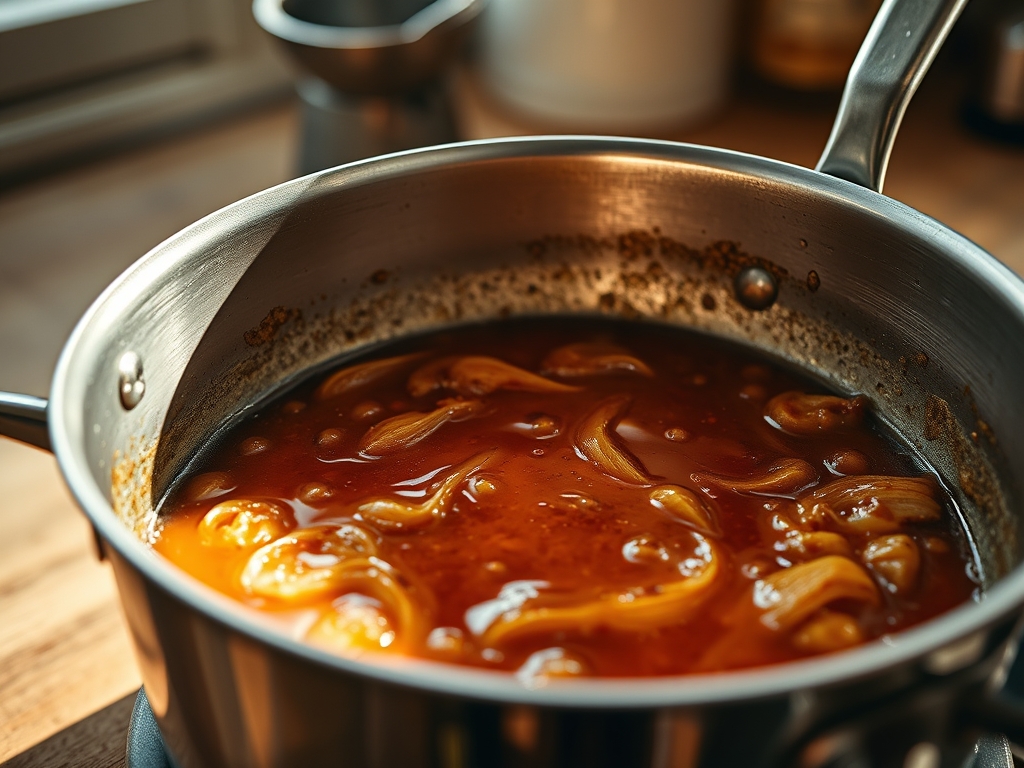
Look at the Masterclass photo above. Notice the vibrant, golden-rod hue and the lack of visible graininess. If your sauce looks dull or grey, you likely skipped the turmeric or used an oxidized batch of Nutritional Yeast B12. If you see dark flecks, your roux scorched at the bottom. To fix a dull color, a micro-dose of mustard powder or extra turmeric can brighten the spectrum. If the texture is "broken" (looking like curdled milk), your heat was too high during the yeast integration. A splash of warm water and a high-speed whisking session can usually pull the emulsion back together. The final product should have a mirror-like sheen, reflecting light rather than absorbing it.
THE DEEP DIVE
Macro Nutrition Profile:
A single serving (approx. 60ml) of this reduction provides a dense concentration of B-complex vitamins, specifically 150 percent of the RDI for B12. It contains roughly 8g of protein and only 4g of net carbohydrates, making it a high-efficiency topping for metabolic health.
Dietary Swaps:
- Vegan: This recipe is natively vegan.
- Keto: Swap the flour for 1/2 tsp of Xanthan Gum. Add the gum slowly to the oil and whisk immediately to avoid "fish eyes."
- Gluten-Free: Use a high-quality chickpea flour or a 1-to-1 gluten-free baking blend.
Meal Prep & Reheating Science:
This sauce stores beautifully for up to seven days in the refrigerator. However, the starch will continue to hydrate, meaning it will thicken significantly when cold. To reheat, do not microwave on high. Place it in a small saucepan over low heat and add a splash of water or unsweetened nut milk. Whisk constantly to aerate the mixture as it warms, which restores the original molecular structure and prevents the fat from separating.
THE KITCHEN TABLE
How do I maximize the B12 intake?
Always add your Nutritional Yeast B12 at the end of the cooking process. Prolonged exposure to temperatures above 212F (100C) can begin to degrade the vitamin profile. Residual heat is your best friend for nutrient preservation.
Why is my sauce bitter?
Bitterness usually stems from two sources: scorched garlic powder or low-quality yeast. Ensure you are using "fortified" nutritional yeast, as unfortified versions have a much more aggressive, sometimes metallic, fermented funk that can be off-putting in large quantities.
Can I freeze this reduction?
Yes, but the texture may change. Upon thawing, the emulsion will likely be broken. To fix this, you must reheat it on the stove and use an immersion blender to re-incorporate the fats and solids into a smooth liquid.
What is the best way to use this?
This infrastructure is designed for versatility. Use it as a base for mac-and-cheese, a drizzle over roasted cruciferous vegetables, or a savory dip for sourdough. Its high protein content makes it a functional replacement for traditional cheese sauces.